

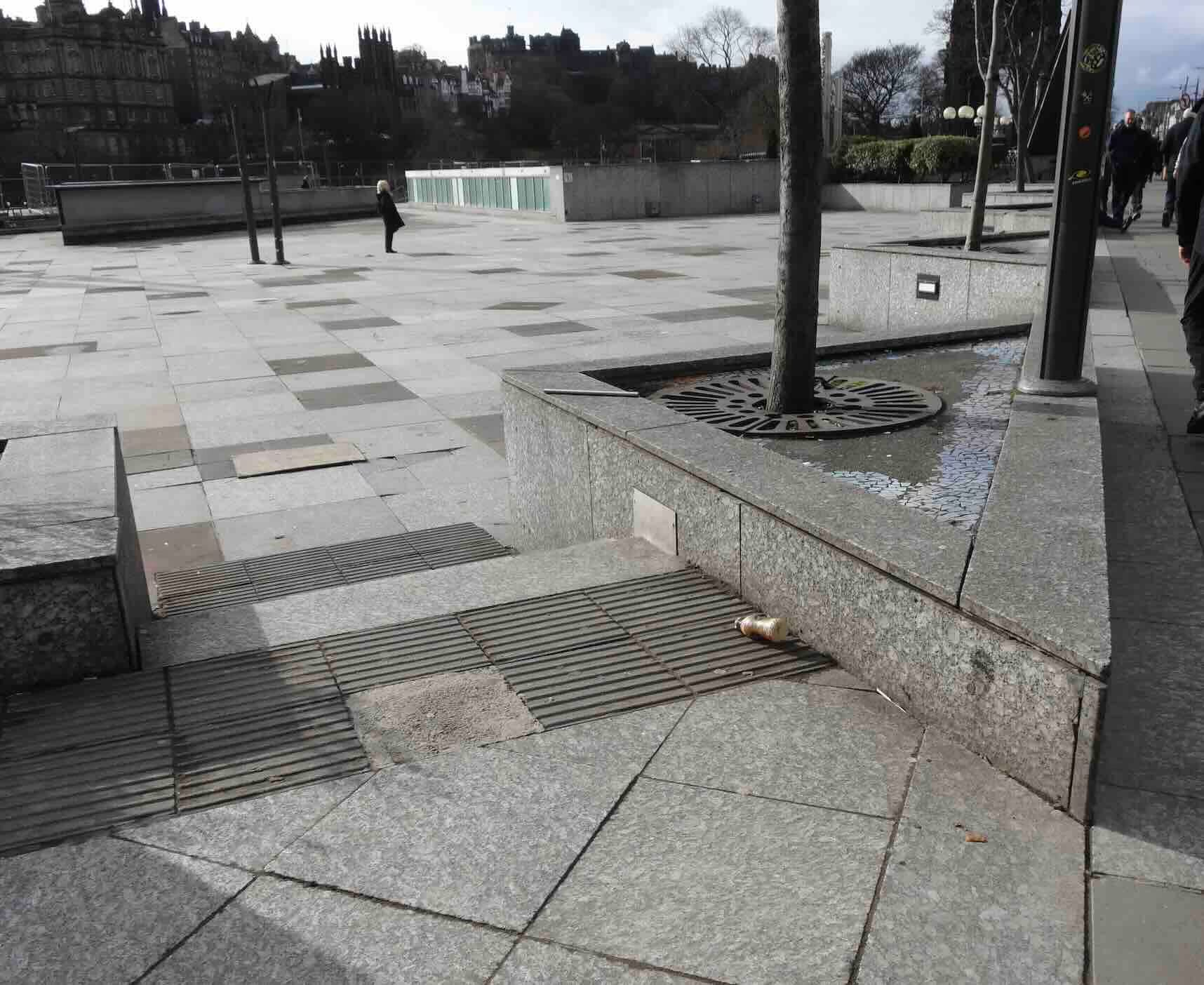
THERE is no obvious reason why the city council does not require development proposals for ‘significant’ sites in the capital - say all those over one acre in size - to be the subject of a design competition.
Maybe developers have consistently and successfully lobbied against it, because they have done the numbers and the numbers tell them that a design from someone they might barely know perhaps won’t necessarily cut it (except that architects / urban designers are well versed in working to a budget and with new clients).
Maybe too there is some form of legal impediment, though it is not clear what that might be.
And it is also perfectly possible that there is resistance from within the architecture profession itself, fearful of losing any special relationships it might already have built up with the developer community.
But, from the point of view of what’s best for the city, it’s a moot point to what extent developers should be dictating how Edinburgh is shaped (even with the ‘safeguards’ being provided by regulations, planning officials and elected members).
The practicalities of organising a design competition are going to be relatively complicated, covering - for example - not just how best to call for entries but how to reassure entrants that their efforts won’t financially backfire on them.
But they are not impossible.
A design competition inevitably requires judging and, the bigger the judging panel, the less prone it would be to undue influence, as well as being potentially representative of an increasingly diverse range of views.
It could be as big as 40 or 50-strong.
And it could choose its shortlist (of five or six?) and the eventual winner by using the already well-established council system of ‘single transferable voting’.
The shortlist would emerge from ‘Stage One’ entries limited to a 1,000 words and six images; in other words, as accessible to newly-established architecture practices, community groups and civic-minded individuals as it would be to much ‘bigger’ players.
Shortlisted entries - ie Stage Two ones - could then liaise with the developer, with the aim of producing a mutually-agreed final design that would go forward to being judged the possible winner.
For Stage Two entrants, they would require to be reassured whether there is any upfront money (an ‘honorarium’) and, at the end of the process, either guaranteed cash or a legally-binding contract to carry out the work (perhaps necessitating the lodging of some form of financial bond by the developer).
They could be required to present to the judging panel and perhaps members of the general public (the Scottish Storytelling Centre has a 99-seat theatre).
All entrants would require to acknowledge that, once their ideas are in the public domain, they become fair game.
And acknowledge also that - by the end of the design process - the ultimate arbiters should likely still be elected members (odd though it would be to overturn such a sophisticated process, especially since there would nothing to stop those same elected members being part of any judging panel).
Throughout, the general public should be able to track the progress of both Stage One and Stage Two entries; indeed, people should be able to share their observations and suggestions (posted online and strictly moderated for politeness, etc) in the hope of them being taken on board.
Were a website to be launched to showcase entries and to allow for public commenting and even online voting (for information only), since it would require paying for someone’s time - to moderate comments and set up any voting - ‘participating members’ would likely require to pay a subscription.
Website debate could easily be accompanied by both online and in-person forums, featuring all the main participants (including from the council’s planning department).
As for those Stage One entrants invited to progress to Stage Two, should any one of them feel they don’t have the necessary capacity, they could be paired up with an organisation that does - with conditions built in to ‘protect’ the original idea and its author(s).
The key question for the city to consider is simply this: what’s the more important? Our built environment decided in the main by developers or our built environment designed in the main by our best ideas?
None of this is beyond the wit of anyone to properly and comprehensively organise.
It’s whether there is the appetite to do it.
PS Should any political party contesting next year’s local government elections be up for including design competitions in their manifesto, BuildEdinburgh would be happy to explain further: editorialbuildedinburgh@gmail.com
Mike Wilson is editor of BuildEdinburgh
Image details: Crying out for a design competition, by whoever owns it? The broken paving and cigarette butts of the Waverley Market rooftop on Princes Street; copyright Mike Wilson
Got an idea yourself about Edinburgh’s built environment? Let’s discuss: editorialbuildedinburgh@gmail.com